Felicity House NEAC, PS (b. 1950)
Felicity House NEAC is a painter and pastelist whose work moves between domestic still life, interiors, figures and landscape, and whose practice is led by drawing. She works from life, en plein air, in the life room and at home, and develops studio pieces from sketchbook studies.
Born in Kent in 1950 and based in Bournemouth, House took an Honours Degree in Education at the University of Bristol (1972) and taught in schools for nearly thirty years. While still teaching, in 1998 she completed an HNC in Fine Art at the Arts Institute at Bournemouth (now Arts University Bournemouth), where she later taught life drawing from 2001 to 2012, as well as courses at West Dean College, Chichester (2005–12). Beyond formal study she sought out direct training under pastelists and draughtsmen, among them Patrick Cullen and Tom Coates (1941–2023), who likewise built his studio pictures on studies made from life, and later took figure drawing courses at the Royal Drawing School, Shoreditch, notably Susan Wilson's 'The Clothed Figure'.
A member of the Pastel Society since 2003—where she has won numerous awards, including the Bill Patterson Memorial Prize and The Arts Club Award—she showed at the NEAC Annual Exhibition for twenty years before her election to the New English Art Club in 2023, the year she shared its Critics' Prize; in 2025 she won both the Club's Bowyer Drawing Prize and its Val Harris Prize. Recent solo exhibitions include 'House & Drawing' at the Red House Museum, Christchurch (2024), and the resulting exhibition at The Table Gallery, Hay-on-Wye (2026).
Where she combines pastel and watercolour, the work typically begins in watercolour. On mid-toned mountboard or sanded Colourfix paper she lays in a neutral underpainting, plotting the composition and establishing the deepest darks before any colour. Tone is settled separately from colour, as in a monochrome underpainting in oil, and for a physical reason: dry pastel holds only while there is tooth to catch it, and darks built up in pastel fill that tooth, after which further marks slide and smear. A thin wash carries the same darks without occupying the tooth, and remains adjustable, so the abrasive surface stays open for pastel. With the middle value supplied by the ground and the darks by the wash, the pastel need not build tone from nothing; it can state colour and light in a few placed strokes. That economy rests on observational drawing: knowing which marks will describe the curve of a glazed pot or the edge of a piece of fruit. Her other media follow the same logic: she paints her oils on small muslin and gesso panels that she prepares and tints herself, so that each begins, like the toned board, from a coloured ground rather than white, and her solar-plate etchings are made from her drawings.
Her domestic subjects have a precedent within the Club in Bernard Dunstan (1920–2017), elected in 1946, who was best known for figures in interiors and, like House, worked in oil and pastel. Her still lifes of glazed ceramics, fruit and kitchen tables continue that line in contemporary British art, distinguished by marks few enough that the finished picture still reads as drawing.
Works by Felicity House NEAC, PS currently available at Jacksons' Picture Gallery are shown below; please enquire if you are looking to source specific subjects.
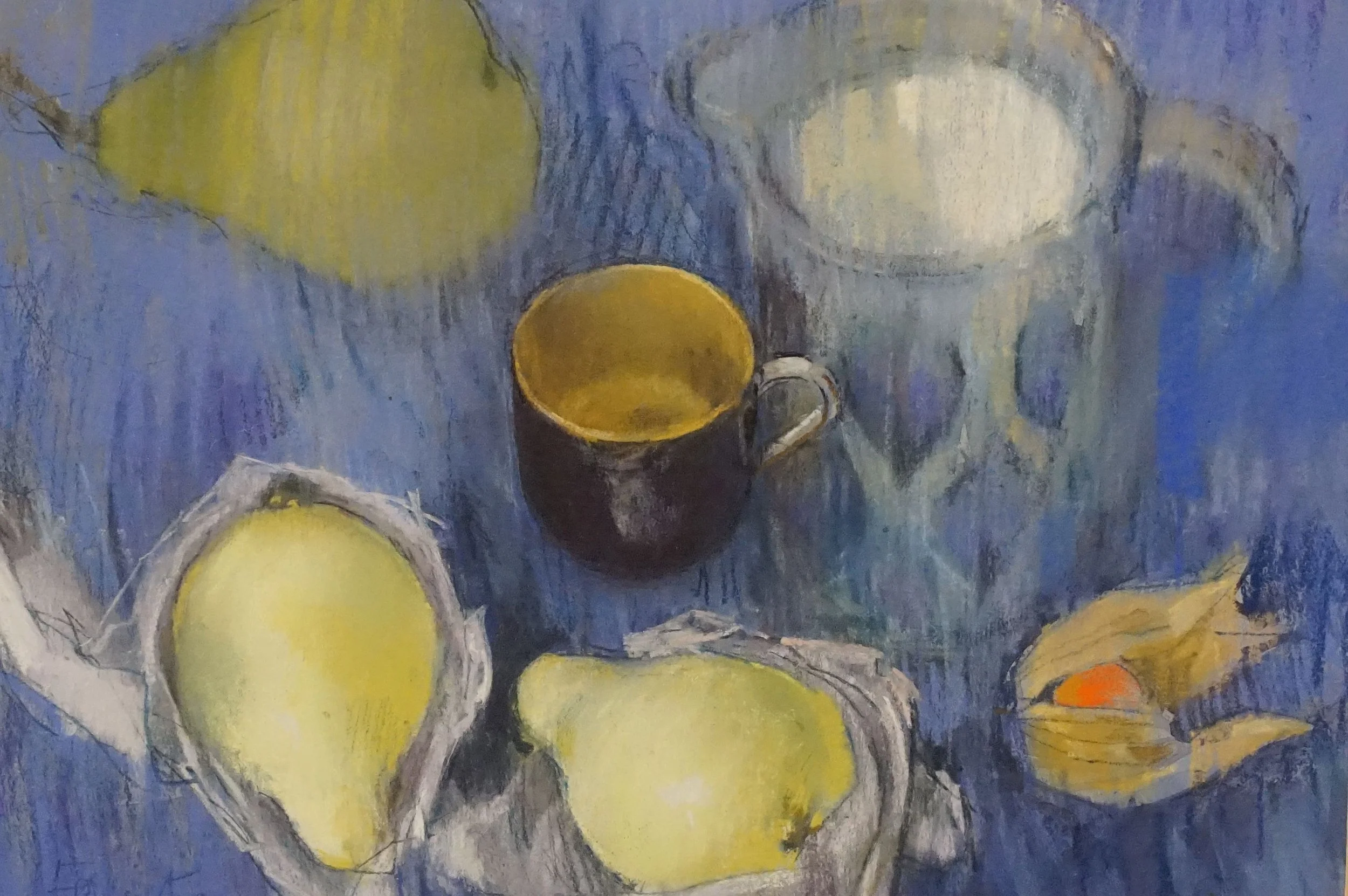
Felicity House NEAC, Still life of pears and ceramics, pastel and watercolour (30 x 25cm), framed and glazed (46 × 41.5cm). Signed.
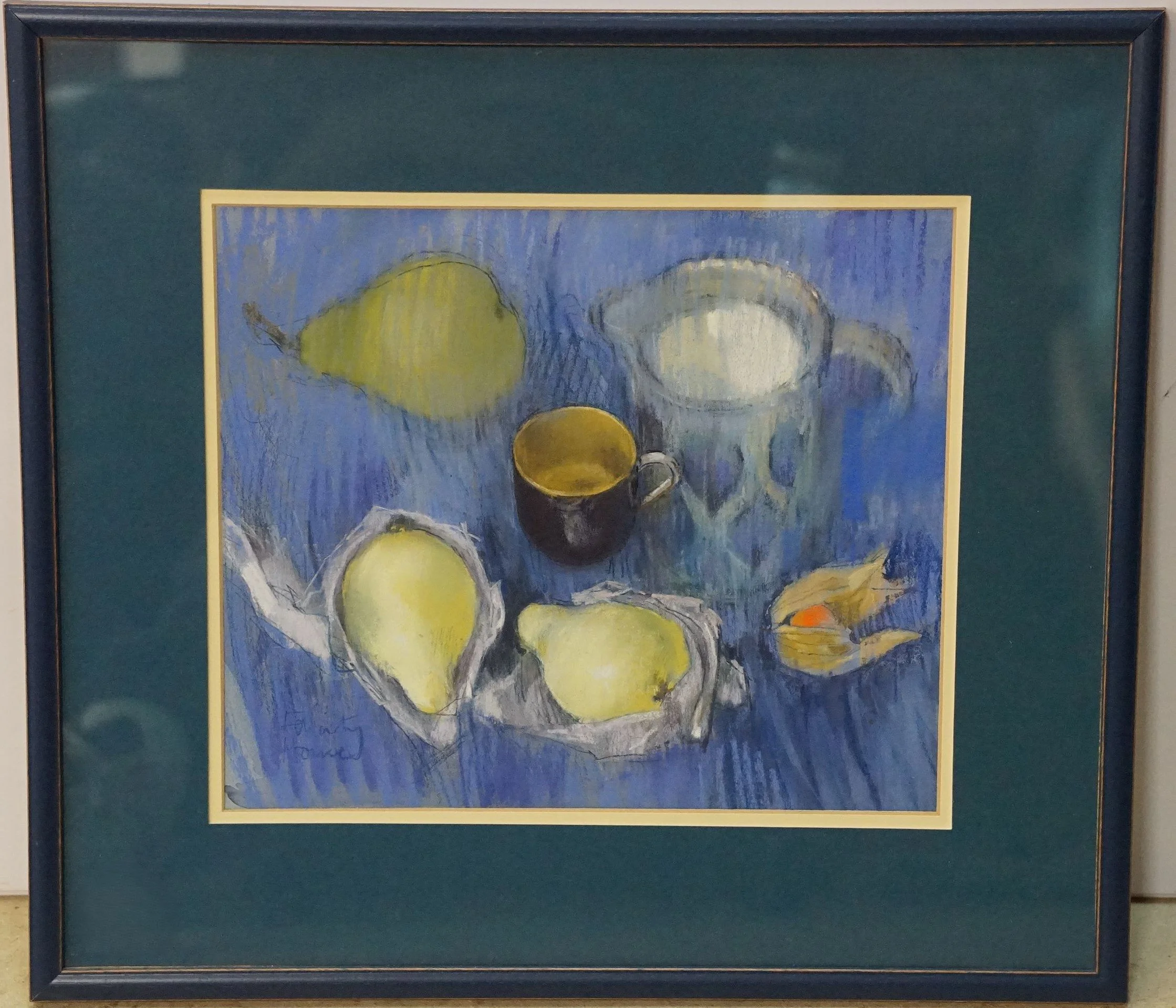
Felicity House NEAC, Still life of pears and ceramics, pastel and watercolour (30 x 25cm), framed and glazed (46 × 41.5cm). Signed.
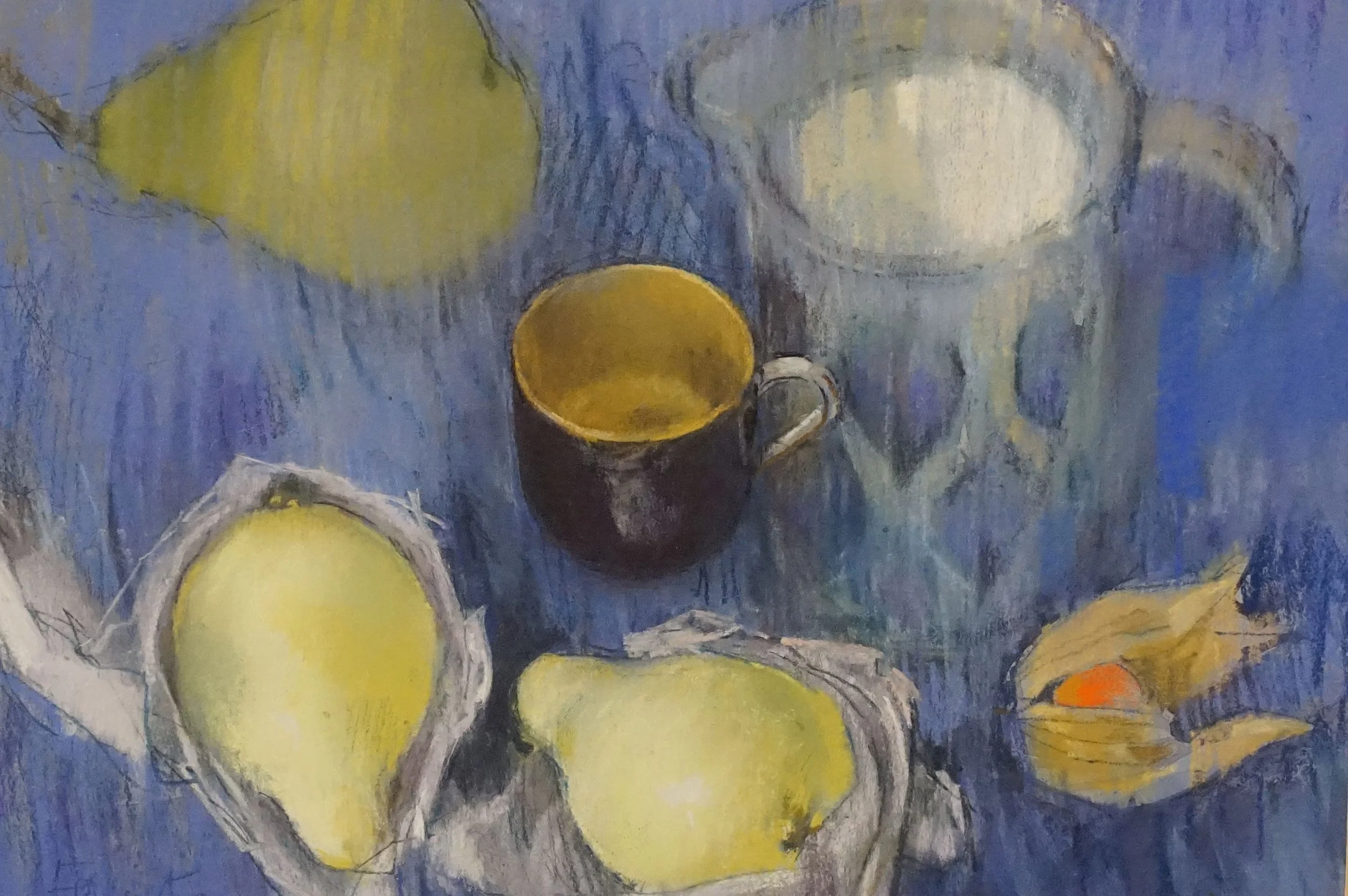
Felicity House NEAC, Still life of pears and ceramics, detail.